
The Shoebill Stork: How to Spot Uganda’s Prehistoric Bird
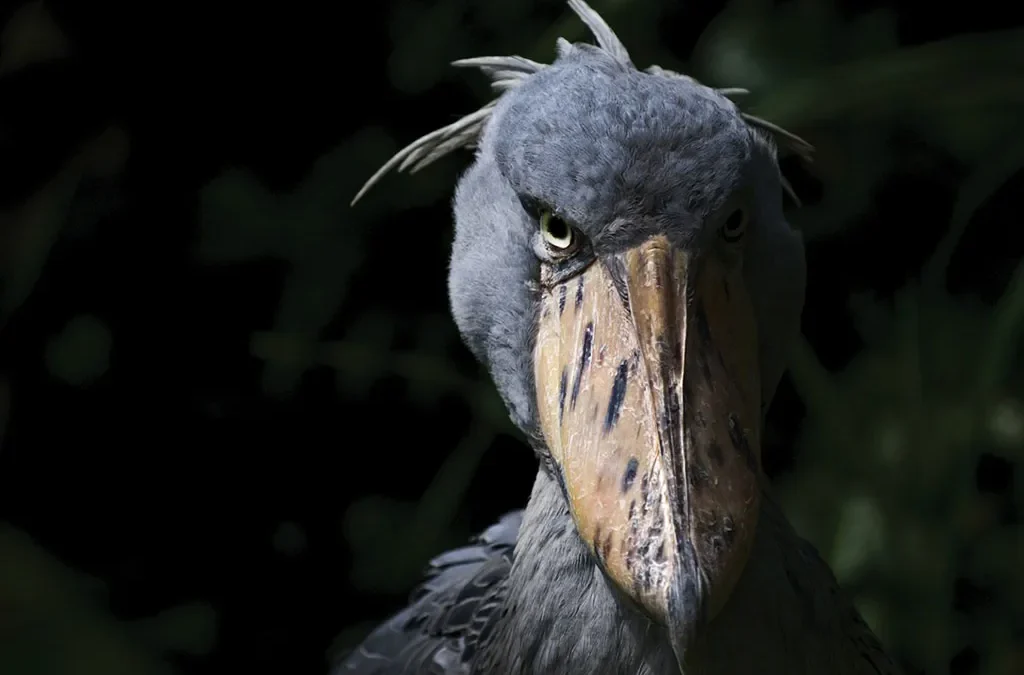
Imagine standing in a silent swamp at dawn, watching a prehistoric-looking bird that seems to have stepped right out of the dinosaur age. With its piercing, intense eyes and massive shoe-shaped bill, the Shoebill Stork (Balaeniceps rex) is one of Africa’s most sought-after and mesmerizing wildlife sightings. For serious birders and nature lovers, encountering a Shoebill Stork in the wild represents a pinnacle experience, a moment of connection with a truly unique creature. Uganda, with its protected wetlands and swamps, has emerged as one of the best places on Earth to reliably find this enigmatic bird, making it a premier destination for a Shoebill Stork safari.
At Wildpath Safaris, with over 15 years of guiding experience through Uganda’s diverse ecosystems, we’ve mastered the art and science of finding these gentle giants. We know their behaviors, their preferred habitats, and the exact locations where your chances of a sighting are highest. This comprehensive guide will take you deep into the world of the Shoebill Stork, providing everything you need to know to witness this incredible spectacle for yourself.
The Enigmatic Shoebill: A Living Fossil
Often called the “whalehead” or “king of the swamps,” the Shoebill is a unique bird that dominates its wetland habitat.
- Standing up to 5 feet tall with an 8-foot wingspan, its size is awe-inspiring.
- Their powerful, shoe-shaped bill is a formidable tool for catching lungfish, its primary prey.
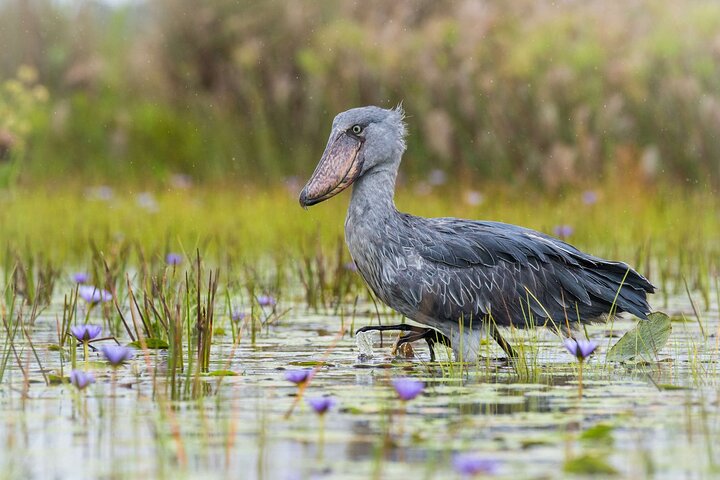
- Known for their remarkable stillness, they can stand motionless for hours, waiting to strike with lightning speed.
- The Shoebill’s eerie, silent nature adds to its mysterious aura – when they do move, it’s with deliberate, prehistoric grace.
Best Places to Spot Shoebills in Uganda
While Shoebills can be found in several Ugandan wetlands, these locations offer your best chances:
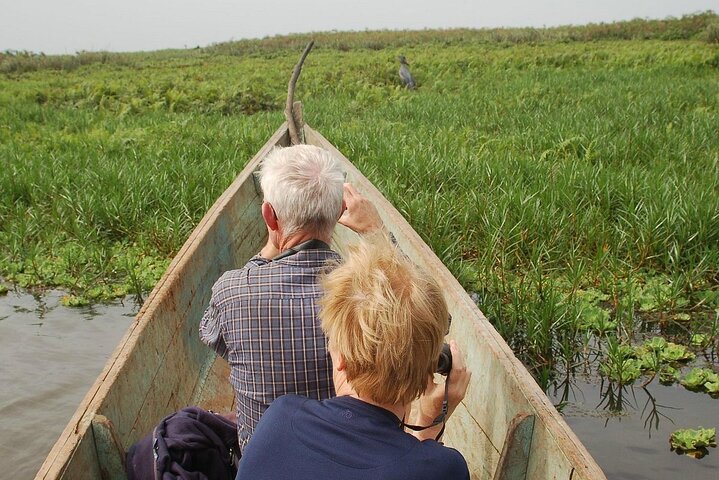
1. Mabamba Bay Wetland (Top Choice)
- Location: Eastern shores of Lake Victoria
- Experience: Traditional canoe trip through narrow papyrus channels
- Why it’s great: High success rate, community-run tours support local economy
- Best time: Early morning or late afternoon
2. Murchison Falls National Park
- Locations: Delta area, Lake Albert shores, and Nile corridors
- Experience: Combined with classic safari game drives
- Why it’s great: See Shoebills alongside other big game
- Best time: Dry season (June-February)
- Location: North of Kampala en route to Murchison Falls
- Experience: Guided walking safari to see Shoebills
- Why it’s great: Guaranteed rhino viewing plus Shoebill opportunity
- Best time: Year-round
When to Go: Seasonal Strategies
Dry Seasons (June-August, December-February):
- Advantages: Lower water levels concentrate fish and birds
- Considerations: More tourists in parks
- Success rate: Very high
Wet Seasons (March-May, September-November):
- Advantages: Lush scenery, fewer tourists
- Considerations: More challenging access to some areas
- Success rate: Still good, especially in Mabamba
How to Maximize Your Shoebill Sighting
- Go Early: Shoebills are most active in the cool morning hours
- Hire Local Guides: Their knowledge of specific bird locations is invaluable
- Be Patient: These birds can stay hidden for hours – patience is rewarded
- Stay Quiet: Loud noises will scare them away
- Bring Good Optics: Quality binoculars and cameras with good zoom are essential
Photography Tips for Shoebill Encounters
- Use a telephoto lens (400mm or longer recommended)
- Shoot in early morning light for best results
- Be ready for sudden action – when they strike, it’s fast
- Include habitat in some shots for context
- Practice shooting from unstable canoe positions
Why Choose Wildpath Safaris for Your Shoebill Adventure?
Our 15+ years of experience in Uganda’s wetlands means we:
- Know the exact locations where Shoebills are currently nesting
- Work with the most experienced local guides in each area
- Can combine your Shoebill search with gorilla trekking or wildlife safaris
- Ensure ethical viewing distances to protect these magnificent birds
Ready to come face-to-face with a living dinosaur? The Shoebill Stork awaits in Uganda’s magnificent wetlands. Contact Wildpath Safaris to include this unforgettable experience in your custom Uganda itinerary. Let us help you witness one of Africa’s most incredible natural wonders.